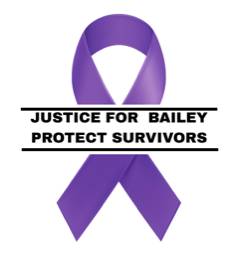
Urgent Legislative and Policy Reforms
I am writing to you in the wake of a devastating tragedy; the preventable death of Bailey, mother of two young girls, who was murdered by her former partner, James Plover.
Bailey was a vibrant, kind, and deeply loved woman whose life was tragically cut short by an act of preventable violence. Her death is a devastating example of the justice system’s failure to protect victims of intimate partner violence, even after those victims have taken every legal step available to seek safety.
Bailey had previously been in a relationship with James Plover. Over the course of their relationship, James became abusive. The abuse escalated to a physical assault in which he choked her; an act widely recognized in domestic violence risk assessment as one of the strongest predictors of future homicide. In addition to choking Bailey, he threatened to take Bailey's life along with her daughters. He assaulted her while she was holding their shared two-year-old daughter. Bailey reported the assault to police, and James was criminally charged.
July 4th 2025, roughly a year after the assault, James Plover was found guilty of assaulting Bailey. Rather than being taken into custody following his conviction, he was released on bail to await sentencing, which was scheduled for September 2025. Despite his history of violence and the clear risk he posed, no conditions were imposed to ensure Bailey’s safety. He was not required to wear a GPS ankle monitor, and—critically—Bailey was not notified of the verdict and his release.
Shortly after his release that same day, James Plover tracked Bailey to her workplace. In a premeditated and brutal attack, he rammed her vehicle with his own, then exited his car and bludgeoned her to death with a hammer in broad daylight. A coworker who attempted to intervene was also violently attacked and left in serious condition.
Bailey’s murder occurred after a conviction had already been secured against her abuser—at a point where she should have been able to rely on the justice system for protection. The fact that her killer was allowed to walk free, unmonitored and unannounced, highlights the urgent need for systemic reform.
This is sadly not an isolated case. Across Canada, women are being killed by former or current intimate partners at an alarming rate. The justice system is failing to protect victims from known, high-risk offenders—especially in cases where there has already been a documented history of violence.
We are calling for urgent legislative and policy reform to address these ongoing failures, and to prevent future deaths.
Key recommendations that we feel need to be urgently implemented include the following:
- Establish a Domestic Violence Offender Registry
British Columbia and Canada must implement a registry—accessible to police and/or the public—tracking individuals convicted of serious or repeat domestic violence offences. This will support early intervention, prevention, and allow survivors or potential partners to make informed decisions. This should build on existing disclosure tools like Clare’s Law and extend further in transparency and scope.
- Reform Bail Policy for High-Risk Domestic Offenders
Bail must not be automatically granted to individuals charged with serious domestic violence offences, particularly where there is a known history of threats, coercive control, or physical violence. The onus must be placed on the accused to prove that they do not pose a continued risk. Furthermore, all high-risk accused persons must be fitted with GPS ankle monitoring devices upon release, and survivors must be notified before release is granted. We have the technology through apps such as snap chat to be able to see where are friends are at any given time, how is it we don't have a way to monitor criminals that pose a risk to individuals such as Bailey. There has to be a way for a GPS monitoring system, along with alerts to the victim. It is unacceptable that Bailey was unaware of her abuser’s release and his whereabouts. A restraining order or court condition is meaningless without the means to enforce it. - Mandate First-Degree Murder Charges in Intimate Partner Homicide
Domestic homicides are not random or spontaneous. They are often preceded by prolonged periods of stalking, coercion, and physical violence. These are premeditated acts and must be treated accordingly. The law should mandate that intimate partner homicides with a history of documented abuse, threats, or control be charged as first-degree murder. - Require Recognition of Lethality Risk Indicators in Bail Hearings
Bailey’s killer had previously assaulted her, including acts of choking—one of the most serious indicators of future lethal violence. Non-fatal strangulation is associated with a 750% increase in the likelihood of future homicide. This fact is well established in research and must be integrated into the decision-making framework of all police, prosecutors, and judges involved in domestic violence cases. Risk assessment tools and judicial education must be mandatory.
Supporting Data:
- In Canada, a woman is killed by her intimate partner every six days.
- In British Columbia, domestic violence accounts for approximately one-quarter of all homicides.
- In 2023, at least 184 women and girls were victims of femicide in Canada, according to the Canadian Femicide Observatory.
- Over 60% of femicide victims had reported their abuser to police before they were killed.
- Non-fatal strangulation is present in 43% of domestic homicide cases.
These numbers are not just statistics. They are lives lost. Bailey’s story illustrates a pattern: the legal system identifies a threat, documents abuse, yet fails to protect the victim from the ultimate act of violence.
This must change. I urge your office to take leadership by proposing and supporting legislation—referred to here as “Bailey’s Law”—to include:
- A provincial Domestic Violence Offender Registry
- Mandatory GPS monitoring and victim notification monitoring system upon release of high-risk offenders
- Presumptive first-degree murder charges in cases of intimate partner homicide with documented abuse history
- Use of validated risk assessment tools and mandatory judicial training in coercive control and strangulation
There is an opportunity, an obligation, to make meaningful, life-saving changes. We owe it to Bailey, and to every woman whose life may be in danger today, to act decisively and without delay.
Thank you for your attention to this critical matter. We, Bailey's family and community, are available for further discussion and we will continue to advocate until necessary reforms are implemented.
Sincerely,
The McCourt Family